

 Services
Steels for heat treatment
Steels for heat treatment are designed to achieve specified mechanical properties through controlled heat treatment processes. These include carburizing, nitriding, quenching and tempering, and surface hardening, enabling a defined combination of strength, hardness, and toughness. Our portfolio covers case-hardening steels, nitriding steels, quenching and tempering steels, surface-hardening steels, and boron-alloyed steels.

Case-hardening steels
Case-hardening steels are used for components requiring a hard surface and a tough core. Surface properties are achieved through carburizing followed by quenching and tempering. In service, this ensures improved resistance to wear and fatigue.
Nitriding steels
Nitriding steels are used for components requiring a hard, wear-resistant surface without significant distortion during heat treatment. Surface hardness is achieved through nitriding, forming a hardened layer with high resistance to wear and fatigue. The process is typically carried out without quenching, maintaining dimensional stability.
Q&T steels
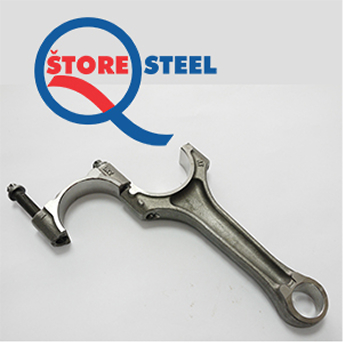
Quenching and tempering steels are used for components requiring a defined combination of strength, toughness, and ductility. Mechanical properties are achieved through quenching followed by tempering, resulting in a uniform structure across the cross-section. This ensures reliable performance under static and dynamic loading.
Surface-hardening steels
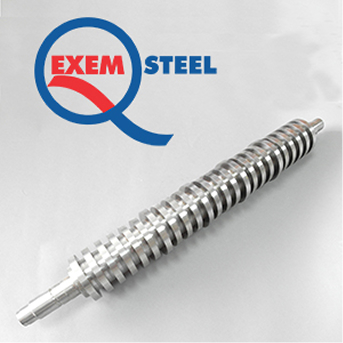
Surface-hardening steels are used for components requiring a hardened surface layer with a tough core. Surface properties are achieved through localized heat treatment processes such as induction or flame hardening. This provides improved wear resistance and fatigue performance while maintaining core ductility.
Boron-alloyed steel
Boron-alloyed steels are used for components requiring high hardenability with relatively low alloy content. Small additions of boron significantly improve the depth of hardening during quenching. This enables the achievement of required mechanical properties in thicker sections and complex geometries.
| Diameter (as rolled condition) | 20-120 mm |
|---|---|
| Diameter (peeled) | 18-105 mm |